Hello!
Welcome the first of our Novus Opus blog posts! This is the first of our industry-specific posts in which we will look into the Ticketing Industry. You can expect a new industry post every two weeks from now on as well as some industry-specific comments from the rest of the team. Alongside our industry-specific insight, we will also have a company post where a member of our team will look, in more detail, into a company working in that particular industry. We hope you enjoy the topics we discuss.
Many thanks,
Novus Opus
The Ticketing Industry
We will begin with the ticketing industry, an industry that has been forced to develop and change drastically over the past 30 years. Ticketing has had to be modernised to adapt to current technology. From cinema tickets to concert tickets, the most common method of purchasing tickets is online via a completely digital transaction. Physical tickets have progressed from historically handwritten notes of paper, to electronically scanned NFC devices or barcode displays. However, with problems such as scalping and adaptation, the industry has not finished adapting to new technology (Ticketmaster.com 2018).

When we look at ticketing it is a difficult industry to narrow down. Personally, Ticketmaster springs to mind as it has almost monopolised the marketplace when it comes to the selling of concert tickets (Knopper et al., 2018). In 1994 it was the first to release barcoded tickets and then in 1996 it released the first online website for ticket sales (Anon, 2018). It has been growing exponentially ever since and is, in some instances, regarded as the only known source to purchase tickets (quora.com, 2018). Ticketmaster is an interesting case study and may be something we look into later but it will not be the focus of today’s post.
Upon investigation of the ticket industry, it is interesting to note how companies are using developments in the industry to save, rather than make, money (Galarza, 2018). Taking airports as an example, over the past 15 years it is the issuing, scanning and checking of tickets that have changed the most. The reduction in jobs and consequential saving of money has changed the airport structure for the better. Boarding passes are now automatically issued online, without the need printing as was the case less than 8 years ago. Check-in desks are rarely used by those on short-haul flights and the issuing of luggage tags has also been automated. These changes have reduced staffing needs and cut costs for many airline companies across the globe. For many it has been a positive change as ticket prices have fallen, but unfortunately for others it has meant job loss.
Airports are just one of many industries where ticketing has drastically altered the way things work and, more importantly, affected those working there. When we think of ticketing, and how Ticketmaster was the first to issue barcodes in 1994, it is hard to look past supermarkets and note how they represent another industry that has not made money from ticketing and barcodes but have changed the way we shop forever. Automatic checkouts and even hand-held scanners have optimised the barcode method of ticketing. One member of staff can oversee and monitor 6 checkouts and the same can be said for using handheld scanners. The process of typing or adding up of total costs is rarely seen. These are just two examples, of which there are many more, of industries where the method of ticketing has changed the way in which we work today.

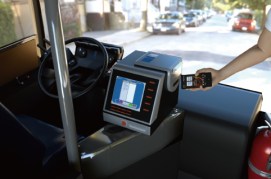
It is only when trying to envisage a stop to this increasing automation that the reality of its impact is realised. The loss of unskilled jobs to automation is a common occurrence across the industries where tickets were once sold, or checked, by human hand (Www2.nsysu.edu.tw, 2018). In the last century it has been check-in attendants and shop assistants who were laid off but we must consider if it will it be passport controllers or all shop attendants who are next to fall victim to automated ticketing?
Conor Wallace
References
Anon, 2018 – Anon, (2018). [online] Available at: https://www.ticketmaster.com/about/our-history.html [Accessed 26 Oct. 2018].
Galarza, M. (2018). – How To Save Time And Money Through Automation. [online] Forbes. Available at: https://www.forbes.com/sites/forbestechcouncil/2016/11/17/how-to-save-time-and-money-through-automation/#4039f5c658e8 [Accessed 26 Oct. 2018].
Knopper et al., 2018 – Knopper, S., Knopper, S., Matsakis, L., Molteni, M., Pardes, A., Mallonee, L., Pandell, L. and Stockton, N. (2018). Everyone Hates Ticketmaster — But No One Can Take It Down. [online] WIRED. Available at: https://www.wired.com/2010/11/mf-ticketmaster/ [Accessed 20 Oct. 2018].
quora.com, 2018 – What is ticketmaster business model? Available at: https://www.quora.com/ [Accessed 20 Oct. 2018]
Ticketmaster.com 2018 – FAQs | Verified Fan. [online] Available at: http://help.ticketmaster.com [Accessed 20 Oct. 2018].
Www2.nsysu.edu.tw, 2018 – Www2.nsysu.edu.tw. (2018). [online] Available at: http://www2.nsysu.edu.tw/BIT/Will%20You%20Survive%20the%20Services%20Revolution.pdf [Accessed 26 Oct. 2018].

 Novus Opus
One thought on “How has the ticketing industry changed the nature of work?”